Poker Games
Best Poker Sites

18+ | Play Responsibly | T&C Apply


Humankind has invented more card games than there are grains of sand in Nevada ... almost. Even if you restrict your research to poker card games, the numbers are surprisingly astronomical. But that just means there's more poker joy to spread around.
Once you feel comfortable with Texas Holdem, Seven-Card Stud or whichever poker game you started out in, you’ll discover that learning other poker games is actually quite easy - and a great pleasure.
If you're looking to play poker games free online you have a couple of options. One, you can download a free poker app that only offers play chips and social games you can play for fun.
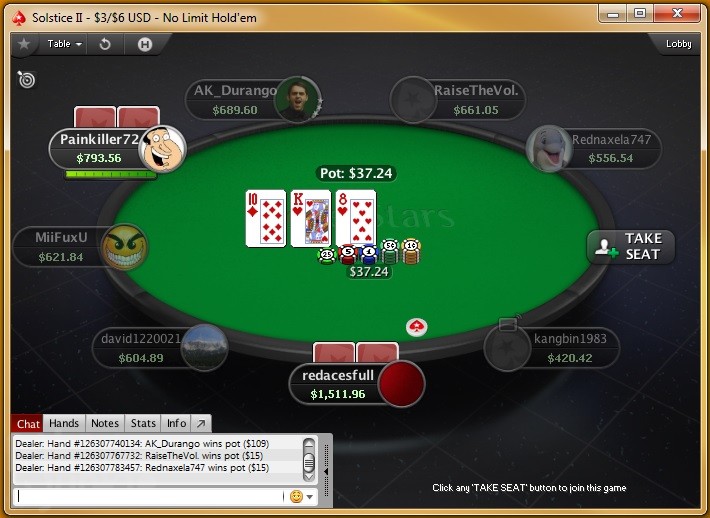
You can also play them directly online or via Facebook, like Zynga Poker. These can be semi-fun games to play as you can build a mass of free chips and climb a play-chip leaderboard to show your overall poker prowess.
What they don't offer, however, is any sense of "real" poker play. As all of the chips are free (or bought in bulk) they don't really have a real "value" per se. So any sense of traditional poker "strategy" is really out the window. Players splash around and go all in with virtually anything.
It's fun but ... yeah. It won't keep you entertained forever. If you really want to play free poker games online that have a bit of structure to them you're better off creating an account at an online poker site and playing their free play-money games.
While games here are also not particularly serious you will tend to find more players who are interested in learning or playing "proper" poker strategy so the games have a bit more sense to them. The ultimate goal for many players is to make some real money playing freeroll tournaments at the poker site and using that money to play real money games. Learn more about free poker online and poker freerolls here:
You can also work your way up a play-money leaderboard, make new poker friends and earn real cash prizes as you go. They're a great starting point to poker games for beginners.
Once you're learned the ropes and are comfortable with the free poker games online you'll likely want to step up to playing poker games with real money.
The amazing thing about online poker is you can do so at virtually any financial level. Unlike live poker games at a casino, poker games online start at very tiny limits - as small as 1 cent!
These are called the "microstakes" - and a huge portion of online poker games actually run at these levels. In fact 90% of all poker games run at stakes under $5 so you'll find plenty of eager opponents.You don't need a big roll to get started.
What this offers, of course, is a chance to play real poker with real money stakes without risking a lot of your own cash.
A minimum deposit at a poker site can be as low as $10 so you can sign up and play for a modest budget and continue to play literally hundreds or thousands of poker games online without ever making another deposit.
if you're successful in the microstakes games or tournaments - or you simply want to increase your competition and pay at higher stakes - you can also do that at any time.
Real money poker games run from 1c/2c and up to even $200/$400 stakes at the nosebleed levels. It's really entirely up to you how high you want to play.
Poker tournaments online are also offered at dozens of levels from pennies per entry to $1, $3, $5, $7, $11 and so on up to the thousands. Whatever your budget and risk tolerance, there are online poker games for you. Learn more about Real Money Poker Sites and how to make your first deposit on our toplist page here:
Downloading a poker site and playing poker games online (for free or for real money) is typically a piece of cake. Just click the "Free Download" or "Play Now" buttons on any of our review pages to start the process.
All poker sites are free to download and it will only take a few minutes to install the software and register your account. Poker sites also provide easy-to-follow, step-by-step instructions too. Using our review link also makes you eligible for our exclusive poker bonuses.
Most poker software clients are not particularly large when it comes to file sizes. Downloads range from from maybe 6 to 30 MB or so. When you've played online games of poker for a couple of years, though, chances are you have downloaded a number of poker sites - maybe even a large number if you're an avid poker bonus hunter (which we recommend).
While we recommend downloading the full poker software to get the best and most secure online poker experience you can still play both free or real money online poker via a poker site's "no download" option.
This is essentially browser-based or Flash-based poker you can play without actually downloading anything on your computer. The game play is more or less the same - you simply need to make sure you have an updated Internet browser (Chrome, Firefox, Explorer, Safari etc) and a good internet connection.
You lose some of the customization options and smoothness of the full download version but you can play plenty of play-money or real-money games to test it out. Look for the No Download or "Instant Play" option in the poker site lobby.
Even if you prefer one particular poker game, like Omaha High-Low or Crazy Pineapple, varying your action across a few different poker games not only gives you diversified stimulation it will also help you improve in your favored game.
All poker games are different, obviously, but there are plenty of parallels between them. What you discover in one game can come in handy in other poker games as well - not to mention if you put them all together and play mixed poker games.
If you play Hold’em primarily it may seem counter-productive to practice Omaha but some low-stakes or play-money Omaha may actually improve your overall poker knowledge and help you when you return to Hold'em.
When you learn multiple poker games you get a chance to look at poker strategy from several different angles - although be forewarned: if you do want to try out some new poker games online some may only be available as real-money games.
Here's a quick run-through of the most popular poker games you'll find online when you play at the biggest poker sites.
Texas Holdem is the most popular of all poker games today both live and online. Each player is dealt two hole cards. After a round of betting, three community cards are dealt on the board shared by all player.
Another round of betting follows and then a fourth card (the "turn) is added to the community board. After another round of betting a fifth card (the "river) is dealt followed by a final round of betting.
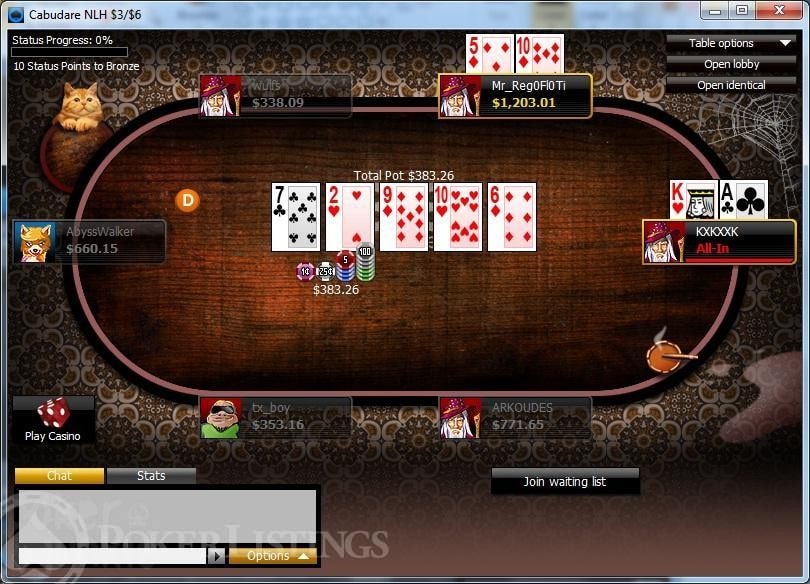
If there are any players left in the hand at that point and the final bets are matched the hand goes to showdown with the highest hand winning the pot.
Today, Texas Holdem poker games are the most popular poker variations and often, when someone generically mentions "poker," they are likely referring to a Texas Holdem poker game. Texas Hold'em is also the poker game you've most likely watched on television.
Read more about Texas Holdem poker rules and strategy here:
Omaha is the second-most popular variation of all poker games. It's much like like Texas Holdem but with two exceptions: Each player receives four hole cards, and you must use exactly two of them together with three of the community cards to form your best five-card poker hand.
Omaha is mostly played as Fixed Limit or Pot Limit rather than No-Limit. For all the basic rules of playing Omaha simply follow the Texas Hold'em rules.
In high-low games, half the pot is won by the player who shows down the lowest hand. Straights and flushes are neglected in the low hands so in Omaha high/low the lowest possible hand is A2345.
A low hand cannot contain any card over eight (that's why it's often called eight-or-better). If there's no low hand the highest hand wins the whole pot.
Seven Card Stud is the most traditional poker game in the US and North America. Each player is dealt two concealed cards and one open card. Then successively each player receives three more open cards and then one last card face down. In seven card stud, there are five rounds of betting.
See detailed rules for 7 Card Stud poker here:

Seven-Card Stud Hi-Lo is just like Seven-Card Stud only the lowest hand wins half the pot. The lowest possible hand is A2345, regardless of suits. As in Omaha high/low, there's a qualifier for the low hands. They cannot contain any card over eight. When no low hand is present, the whole pot goes to the highest hand.
Razz is the short name for Seven Card Stud low. This game is played just like Seven Card Stud only the lowest hand wins the whole pot. High hands don't count at all. Since there are no high hands in Razz there's also no qualifier on low hands. That is, they are not limited to cards below nines.
Razz and the rest of the poker games below are usually available only as real-money poker games online.
Crazy Pineapple has become very popular in the last few years. In this poker game, each player receives three hole cards. After the betting on the flop has ended each remaining player must discard one card. From there the game is played exactly like Texas Holdem.
In Five-Card Stud, or 5 Stud, each player receives one card face down and one open card. Then, successively, three more open cards are dealt to each player, with betting in between, for a total of four betting rounds. The highest hand wins the pot.
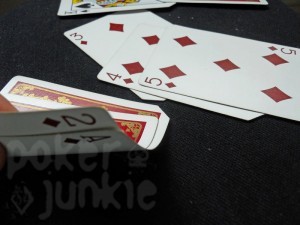
Five-Card Draw (5 Draw) is another classic poker game. For many, this game is simply "poker." Each player is dealt five cards face down. After one round of betting each remaining player can discard any number of his or her cards and draw the same number of new cards from the deck. Then there's a last betting round and a showdown.
This poker game has seen a huge rise in popularity lately, and not only among high-stakes professionals. It plays like Five-Card Draw, but players draw new cards three times instead of just once. Contrary to five card draw, in this poker game the lowest hand wins the whole pot.
Aces count as high cards and straights are not neglected. Like this, the lowest hand in 2-7 Triple Draw is 2-3-4-5-7, which explains the name of the game.
This game is played like 2-7 Triple Draw, except that aces are low and any straights or flushes are disregarded. Players hold five concealed cards and can exchange any number of them for new cards a total of three times. The best hand is A-2-3-4-5.
All of these games are called "mixed games" and are the best poker games according to most pros. Basically you can put together any list of poker games and name it according to the abbreviations for the included games:
H = Holdem, A = Omaha, O = Omaha high/low, S = Seven Card Stud, E = Seven Card Stud high/low (Eight or better), R = Razz, T = Triple Draw.
The version called "8-Game" is a PokerStars specialty and in the WSOP there's always an 8-game mixed event.
More Poker Games Resources: