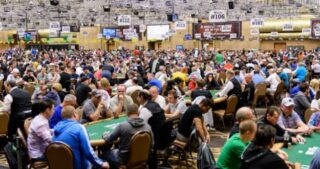
Poker is being played all over the world and televised tournaments featuring hundreds and even thousands of players competing for millions of dollars are the norm.

In a game that was once thought to be a purely American phenomenon, the world champion of poker is Danish, Peter Eastgate, and the runner-up is brilliant Russian poker player Ivan Demidov.

But poker was not always a game well known to almost everyone. The game started from fairly humble beginnings.

Origins of Poker

The origins of the fascinating poker game are somewhat in dispute. Many say that it bears similarities from the ancient Persian game of As Nas and has its roots in said game. However, it is commonly thought that the French brought their game "poque," meaning to brag (really, in this case, to brag about something untrue, or to bluff), to the American south, where local dialects transformed it from "poque" to "pokah" and then "poker."

Evolution of Poker

Poker really flourished along the Mississippi River in the 18th and 19th century, and cardsharps moved freely among riverboats, looking for gamblers up for a game. During this period, the real skill in poker was in cheating, and it was very difficult if not impossible to win a session of poker on the square.

In the early years, all the cards were put into play, with four players playing a simple showdown game from a 20 card deck. Over the course of the 19th century, the game involved to a full 52 card deck, with straights and flushes added, and variations that added more challenging elements, such as draw poker and stud poker.

Modern Poker

The 20th century saw evolutions such as wild cards, split games, lowball games and community card games such like Texas holdem. In 1970, the seeds for the poker boom were planted when the World Series of Poker began, introducing poker players to the concept of the poker tournament.

Poker was still considered a shady, dishonest business by many - until 2003, when the convergence of hole card cameras allowed television viewers to enjoy the game, and Internet poker allowed amateur poker player Chris Moneynmaker to win the multi-million dollar WSOP championship without putting up the $10,000 entry fee. This brought poker into living rooms all across America.

Poker only grew from that point on, and is now enjoyed and appreciated all over the world.